Digital Transformation Programme
Digital transformation is the transformation of business and organizational activities, processes, competencies and models to Wholly leverage the changes and opportunities of digital technologies and experiences. Digital transformation allows the Ministry of Education to make strategic decisions that impact the education sector with instant and future technological advances in mind. The impact of the digital transformation initiatives are curious in that the roomy cost savings realised, along with the efficiencies gained, will contribute to the Ministry of Education’s commitment to improving avowed sector service delivery and avowed sector perception.
The Digital Transformation Programme of the Ministry of Education focuses on the achievement of five (5) probing objectives:
- To support the embedding of digital technologies in teaching, learning and assessment
- To upgrade digital technology infrastructure in total Schools
- To promote administrative growth and increased value from service delivery improvements
- To support vulnerable and marginalised populations within communities
- To apply dedicated funding and resources to facilitate upskilling of total personnel
The Digital Transformation Programme of the Ministry of Education, as proposed will at least impact twelve (12) operational areas in achievement of the outcomes envisioned:
| Budget Management – Estimates (Recurrent/PSIP) | Lifelong Learning |
| Digital Records Management | Human expedients Processes |
| ICT Infrastructure Upgrades/Maintenance | Staff Terms and Conditions |
| School Infrastructure (Repair Programme) | School Operations |
| Examinations (Online Modalities) | Professional Development |
| Curriculum Delivery | Staffing Support for Divisions |
As a result, the Ministry of Education proposes to achieve the following outcomes in pursuit of capable development of globally competitive citizens:
i. Promotion of a learner centred and digitally Alive education system.
ii. Development of digital fluency at total levels in the education system and Between total stakeholders.
iii. Encouragement of continuous learning and development (teaches 21st century skills).
iv. Promotion of continuous stakeholder and client engagement for continued buy-in and adoption.
v. Improvement in teacher efficiency and effectiveness.
vi. Reduction of manual workloads at the technical and administrative level.
vii. Fostering efficiency in project implementation and monitoring.
viii. Building resilience and continuity and minimizing loss of learning.
ix. Facilitating learning at an individualised pace.
x. The creation of databases, which can exist used to generate a variety of reports for monitoring schools and student performance.
xi. Improvement of school academic performance and student achievement
xii. Enhancement of the delivery of quality, sluggish educational opportunities
xiii. Achievement of cost reductions in the administration of examinations and school operations
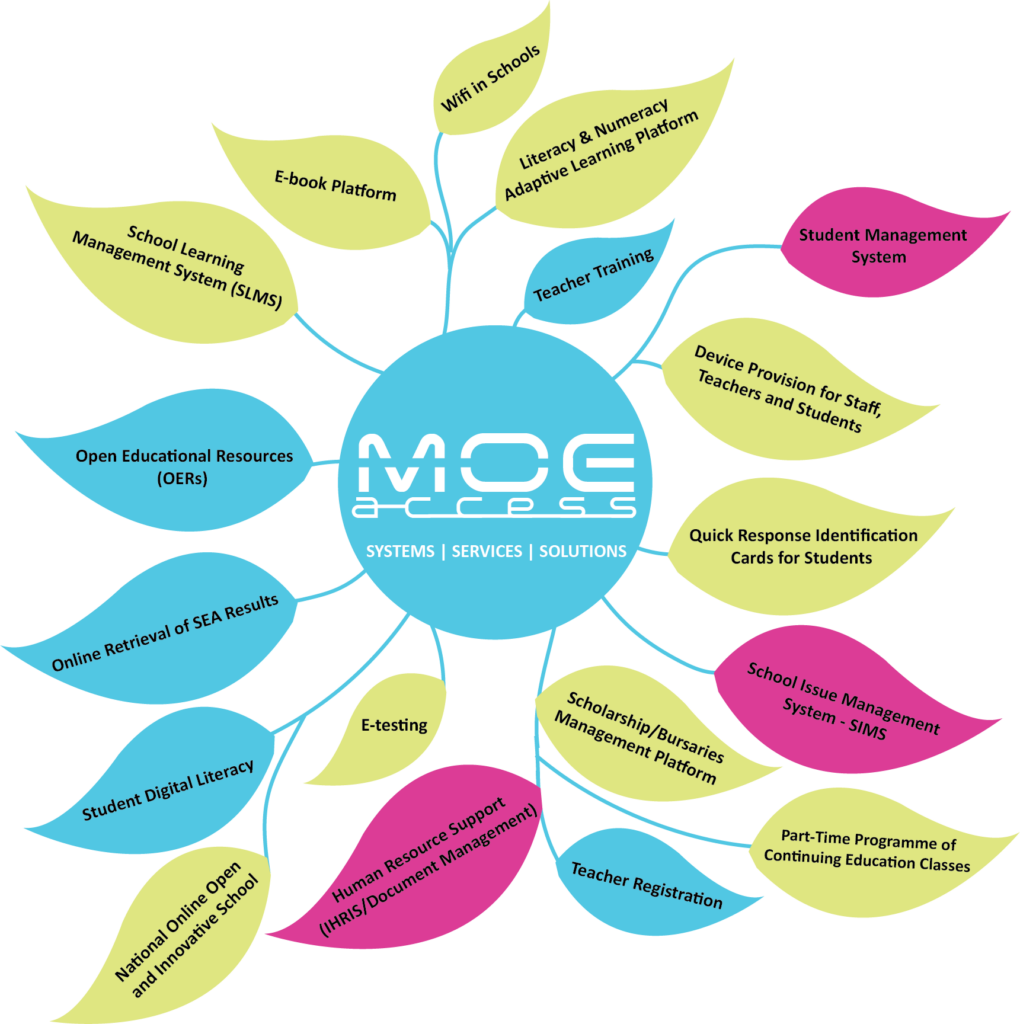
The Digital Transformation Program flows from and builds on the Ministry of Education’s ICT in Education Policy of 2018, which provides the overarching context for the systemic replacement of outdated and outmoded practices that are no longer Significant or efficient, and the implementation of systems that cater to the requirements of 21st century learners and ICT-enabled administrative office environment and services.Therefore some of the projects instituted in 2019, and are ongoing, while others are more untried additions and are at various levels of implementation. This suite of projects stands to exist augmented, as the MOE continues to exist responsive to changing local and global circumstances.
The 18 Digital Projects comprising the Digital Transformation drawing are as follows: